

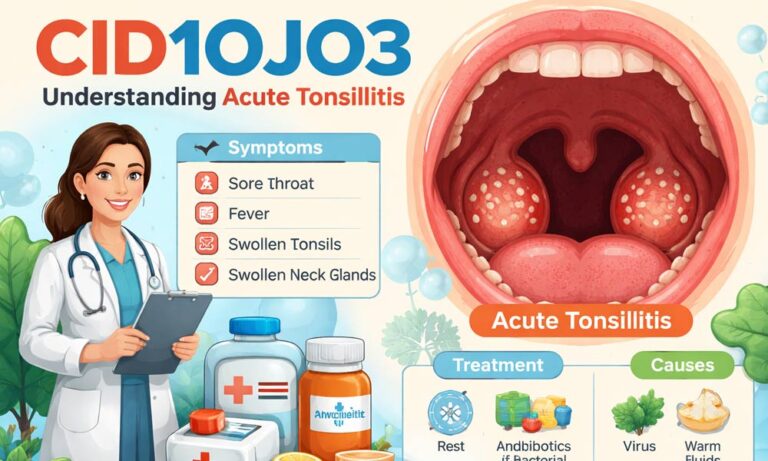
Have you ever had a sore throat that felt so painful you did not even want to swallow water? Many people think it is just a cold and ignore it. But in many cases, that pain is something doctors call acute tonsillitis. In healthcare, this condition is known by the code cid10j03, and it is far more common than most people realize.
CID10J03 is not just a medical label used behind hospital doors. It plays a big role in how doctors diagnose illness, how treatment is chosen, and even how insurance works. In 2026, understanding your health codes helps you make better decisions. In this article, we will explain what cid10j03 means, why it matters, and how it affects your health, all in very easy and clear words.
What Is CID10J03 in Simple Words?
CID10J03 is the official medical code for acute tonsillitis. Acute tonsillitis happens when the tonsils become swollen and painful because of an infection. The word “acute” means the illness starts suddenly and can feel intense.
Doctors all over the world use the ICD-10 system, and cid10j03 is part of that system. This code helps doctors clearly tell what condition a patient has. Instead of using long descriptions, the code makes communication faster and more accurate. When a doctor writes cid10j03 in your medical record, it simply means you have acute tonsillitis.
Why CID10J03 Is Important in Healthcare
The importance of cid10j03 goes far beyond naming a disease. It helps doctors treat patients correctly and quickly. When everyone uses the same code, there is less confusion. Doctors, nurses, labs, and hospitals all understand exactly what condition is being treated.
CID10J03 is also important for insurance and billing. Insurance companies rely on this code to approve tests, medicines, and visits. Without the correct code, treatment could be delayed. In modern healthcare, codes like cid10j03 help keep patient care smooth, organized, and fair for everyone involved.
What Causes Acute Tonsillitis (CID10J03)?
Acute tonsillitis under cid10j03 is caused by germs. These germs can be viruses or bacteria. The most common bacterial cause is streptococcus, which also causes strep throat. Viral infections such as the common cold or flu can also lead to swollen tonsils.
This condition spreads easily from one person to another. Coughing, sneezing, sharing food, or close contact can pass the germs. That is why cid10j03 is seen more often in children, schools, families, and crowded places. A weak immune system also makes it easier for someone to get tonsillitis.
CID10J03 Symptoms You Should Not Ignore
The most noticeable symptom of cid10j03 is a strong sore throat. Swallowing may feel painful, and even drinking water can be uncomfortable. Many people also develop a fever, feel tired, or notice swelling in their neck.
Other signs include red or swollen tonsils, white or yellow spots on the tonsils, and bad breath. Children may not always explain their pain clearly. Instead, they might refuse food, cry often, or complain about stomach pain. Spotting these symptoms early helps prevent serious problems and speeds up recovery.
How Doctors Diagnose CID10J03
Doctors usually diagnose cid10j03 by first looking at the throat. They check if the tonsils are red, swollen, or covered with white patches. They also gently feel the neck to see if the lymph nodes are swollen.
Doctors ask questions about symptoms, fever, pain level, and recent contact with sick people. In many cases, a rapid strep test or throat swab is done. These tests help find out if bacteria are causing the infection. A correct diagnosis ensures the patient gets the right treatment without unnecessary medicine.
CID10J03 Treatment Options That Work
Once a doctor confirms that you have cid10j03, they will decide what treatment is best. If the tonsillitis is caused by bacteria, antibiotics will likely be given. These medicines help fight the infection and stop it from getting worse. But if it’s a virus, antibiotics won’t help, and the body needs time to heal on its own.
No matter the cause, supportive care is always important. This means drinking plenty of fluids, getting lots of rest, and taking medicine to reduce pain or fever. Some people also find warm saltwater gargles or throat lozenges helpful. These small steps can make you feel better while your body fights the infection.
How Long Does It Take to Recover from CID10J03?
Most people who have cid10j03 feel better in 5 to 10 days. If you’re taking antibiotics, you may notice the pain easing within the first couple of days. But even if you feel better, it’s very important to finish all the medicine your doctor gives you. This helps make sure the infection doesn’t come back.
Getting better also depends on how your body reacts. If you rest well, stay hydrated, and avoid overworking yourself, recovery can be faster. But pushing too hard or skipping care might make things take longer. Always listen to your body and give it the time it needs.
Is CID10J03 Contagious? How to Stay Safe
Yes, cid10j03 is contagious, especially during the first few days. The germs that cause it can spread easily through coughs, sneezes, or by sharing food or drinks. Even close contact, like hugging or kissing, can pass the infection to others.
The best way to stop the spread is by staying home when you feel sick. Cover your mouth when you cough or sneeze. Wash your hands often, especially after touching your mouth or nose. And never share eating tools or water bottles with others when you’re not well. These simple steps keep you and others healthy.
CID10J03 Complications: What Happens If You Ignore It?
If cid10j03 is not treated properly, it can lead to more serious problems. One common issue is a peritonsillar abscess, which means pus forms near the tonsils. This can cause even more pain and may need extra treatment.
In some cases, untreated strep infections can cause rheumatic fever or kidney problems. These are rare but serious. If the infection keeps coming back again and again, doctors may even suggest removing the tonsils through surgery. That’s why it’s so important to get care early and follow all treatment instructions.
CID10J03 in Kids vs Adults: What’s the Difference?
Children tend to get cid10j03 more often because they are still building strong immune systems. They also spend time in groups, like at school or daycare, where germs can spread quickly. In kids, the illness may also come with tummy pain or a refusal to eat.
Adults get it less often, but when they do, the symptoms can be more intense. It may take longer to heal, and the pain might be harder to manage. For elderly people, cid10j03 can be risky because of weaker health or other illnesses. No matter your age, it’s always smart to take symptoms seriously and see a doctor when needed.
How CID10J03 Helps Doctors, Nurses, and Insurance
CID10J03 is more than just a number. It helps the whole healthcare system work better. Doctors use the code to choose the right treatment. Nurses use it when recording your care. Hospitals track it to see how many people are getting sick. Even insurance companies rely on it to approve tests and medicines.
When everyone uses the same code, there are fewer mistakes and faster care. It also helps with research, so experts can study how often people get tonsillitis and how to treat it better. In short, cid10j03 keeps healthcare running smoothly from start to finish.
Quick Tips to Prevent CID10J03 (Tonsillitis)
Even though cid10j03 is common, there are easy ways to protect yourself. The first is to wash your hands often, especially after being in public places. Try not to touch your face or mouth when your hands are dirty.
Eat healthy foods, sleep well, and stay active. A strong body fights germs better. If someone near you is sick, keep your distance. Don’t share food, drinks, or anything that touches the mouth. These simple habits go a long way in keeping you safe from tonsillitis and other infections.
Conclusion
Now you know that cid10j03 means acute tonsillitis — a painful but treatable throat infection. Understanding this code helps you know what’s happening in your body and how to take care of it. You also understand how doctors use this code to give the right treatment and why it’s so important in healthcare today.
If you or someone you love has a sore throat that won’t go away, don’t wait. Know the signs, get checked early, and follow the right steps. With care, rest, and the right help, cid10j03 doesn’t have to be scary. It’s just one more part of staying informed and healthy in 2026.
(FAQs)
What does CID10J03 mean in simple words?
CID10J03 is a medical code that means acute tonsillitis. Acute tonsillitis is a condition where the tonsils become swollen and painful because of an infection. Doctors use this code to clearly identify the illness and give the right treatment.
Is CID10J03 the same as strep throat?
Not always. CID10J03 means acute tonsillitis, which can be caused by viruses or bacteria. Strep throat is a bacterial infection and can be one cause of CID10J03, but tonsillitis can also happen without strep bacteria.
Is CID10J03 contagious?
Yes, CID10J03 is contagious. The germs that cause acute tonsillitis can spread through coughing, sneezing, sharing food, or close contact. This is why it spreads easily in schools, families, and crowded places.
How long does CID10J03 usually last?
Most people recover from CID10J03 within 5 to 10 days. With proper rest, fluids, and treatment, symptoms often improve in just a few days. Some cases may take longer, especially if treatment is delayed.
Do you always need antibiotics for CID10J03?
No, antibiotics are not always needed. They only help if CID10J03 is caused by bacteria. If a virus is the cause, antibiotics will not work. Doctors decide this after tests like a rapid strep test or throat swab.
What are the most common symptoms of CID10J03?
The most common symptoms include a sore throat, pain when swallowing, fever, swollen tonsils, swollen neck glands, and bad breath. Children may also have stomach pain or refuse to eat.
Can CID10J03 be dangerous if left untreated?
Yes, ignoring CID10J03 can lead to serious problems. These include abscesses near the tonsils, repeated infections, breathing problems during sleep, rheumatic fever, or kidney issues. Early treatment helps prevent these risks.
Is CID10J03 more common in children or adults?
CID10J03 is more common in children, especially those in school. Adults can still get it, and when they do, symptoms can be more painful and recovery may take longer. Older adults face higher risks of complications.
How do doctors confirm CID10J03?
Doctors diagnose CID10J03 by checking the throat, asking about symptoms, and sometimes using lab tests. A rapid strep test or throat culture helps find out whether bacteria are causing the infection.
Can CID10J03 be prevented?
You can lower your risk by washing hands often, avoiding close contact with sick people, not sharing food or drinks, and keeping your immune system strong. Good hygiene is one of the best ways to prevent CID10J03.
You may also read: Instafest App: Turn Your Spotify Music Into a Dream Festival Poster
